Thursday, 20 February 2020

Repainting

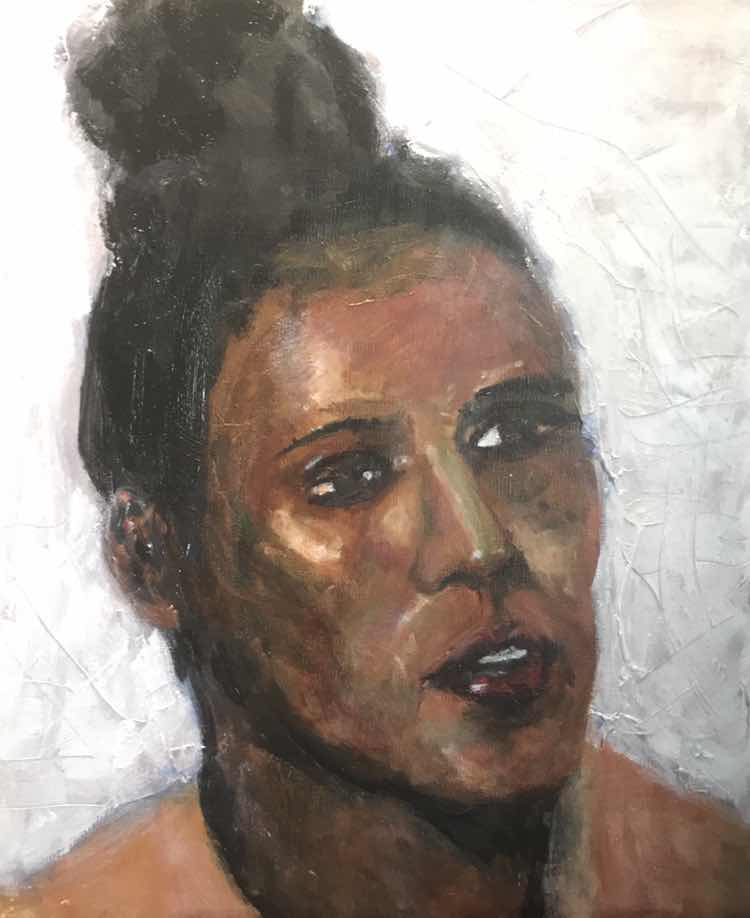
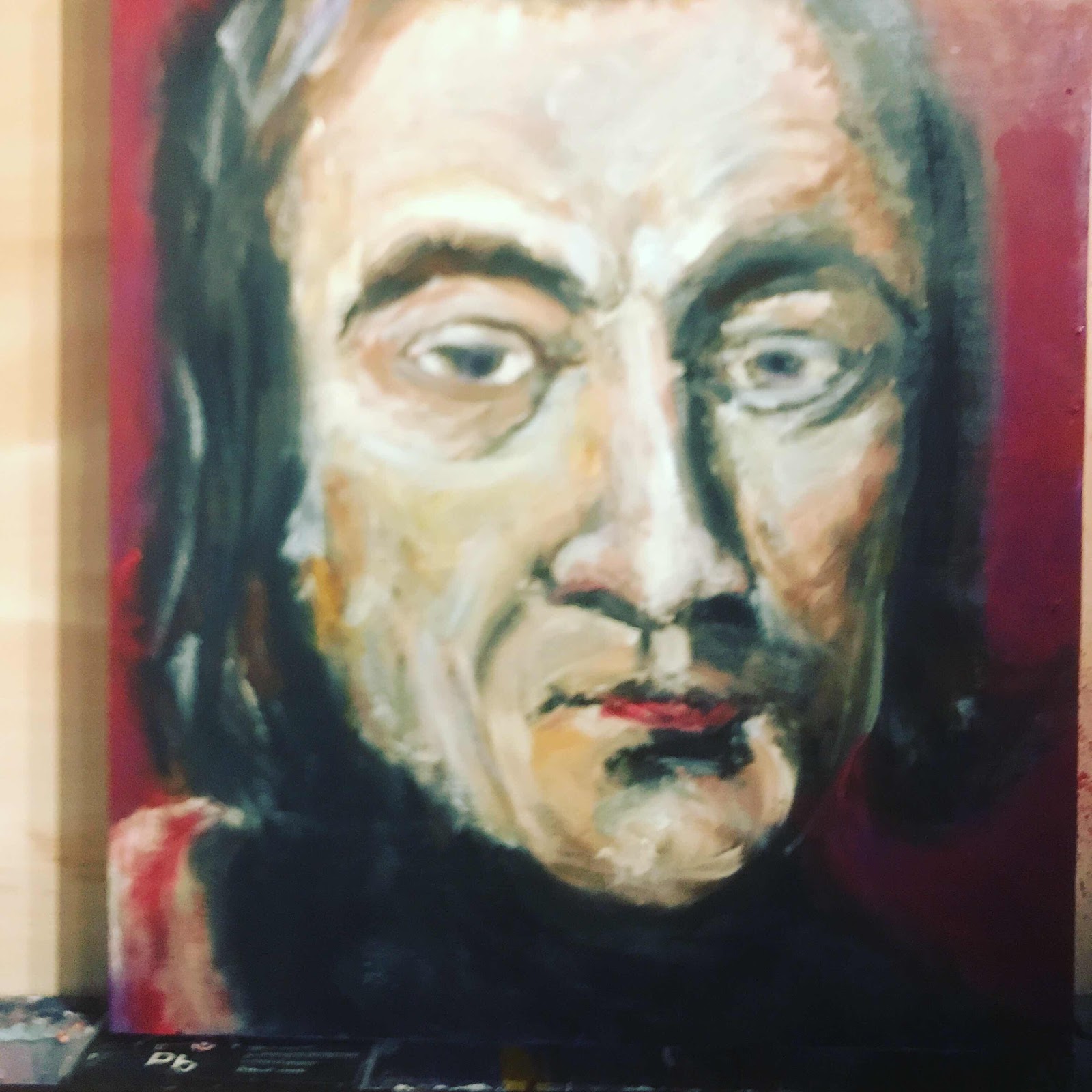
Sitting in my studio with my paintings all around me, usually left out to dry - oil paintings take several months to dry completely - I often find myself looking at some of my work and thinking "that's not quite right..." So sometimes I pick them up and do some additional work on them. This ranges from minor changes, a bit of varnish here and there, a refreshment of something that looks dull to painting over the whole damn thing! So at the moment I am working on one very large painting intending in the end to represent the Merthyr Rising in some way or another, whilst at the same time a portrait of African revolutionary Thomas Sankara ("Africa's Ché") and at the same time repainting and adjusting some older works - the portrait I did recently of William Davidson -which needs a lot more work, the portrait of Robert Owen that I did a couple of months ago - minor changes to enhance and improve, and the portrait of Elaine Brown I "finished" a while back. I've pretty much finished with the latter two, so here's what they look like now:

Elaine Brown

Robert Owen

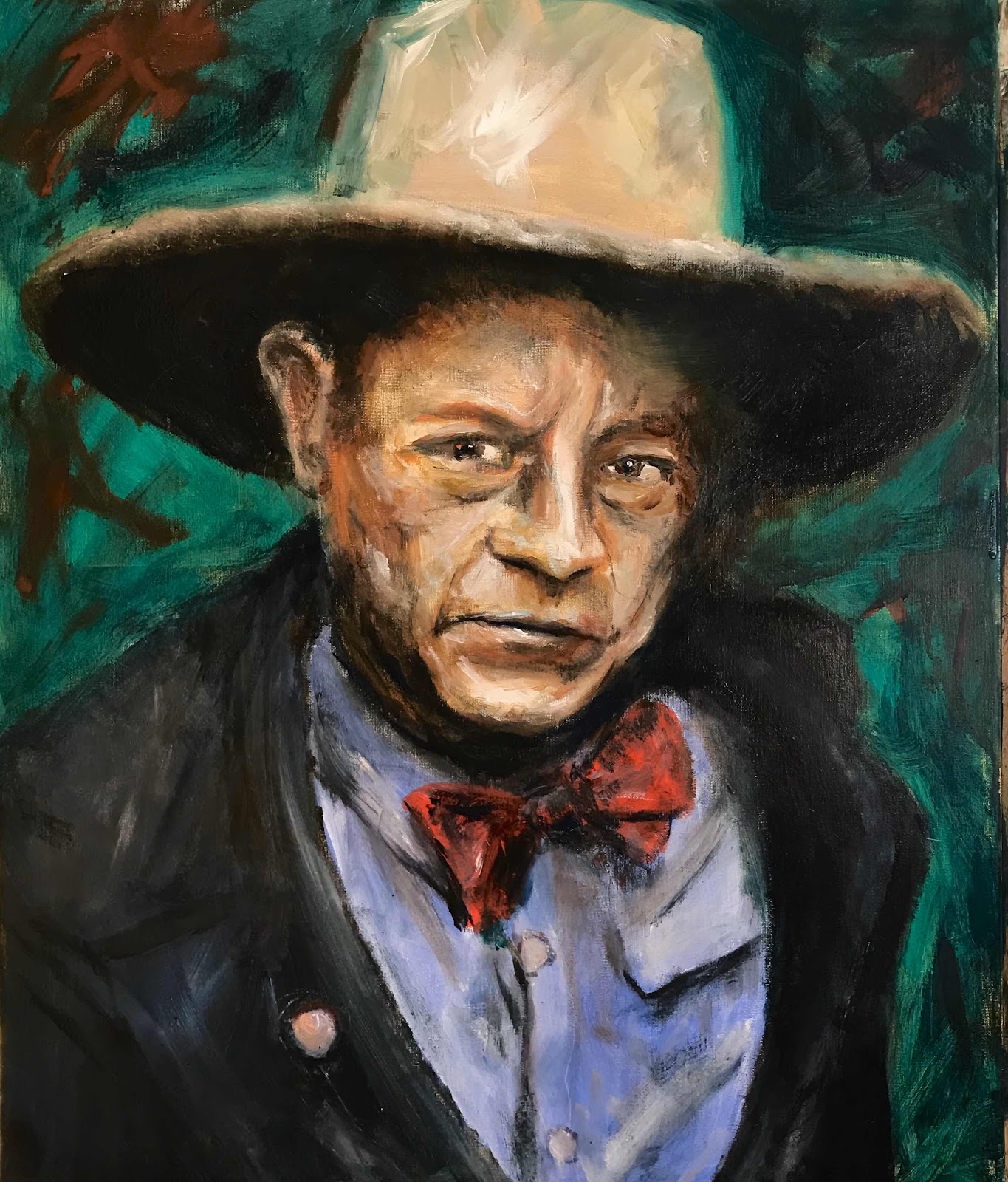
And here's what Thomas Sankara looks like at the moment. Finished?? Who knows...


Wednesday, 11 December 2019

Painting again

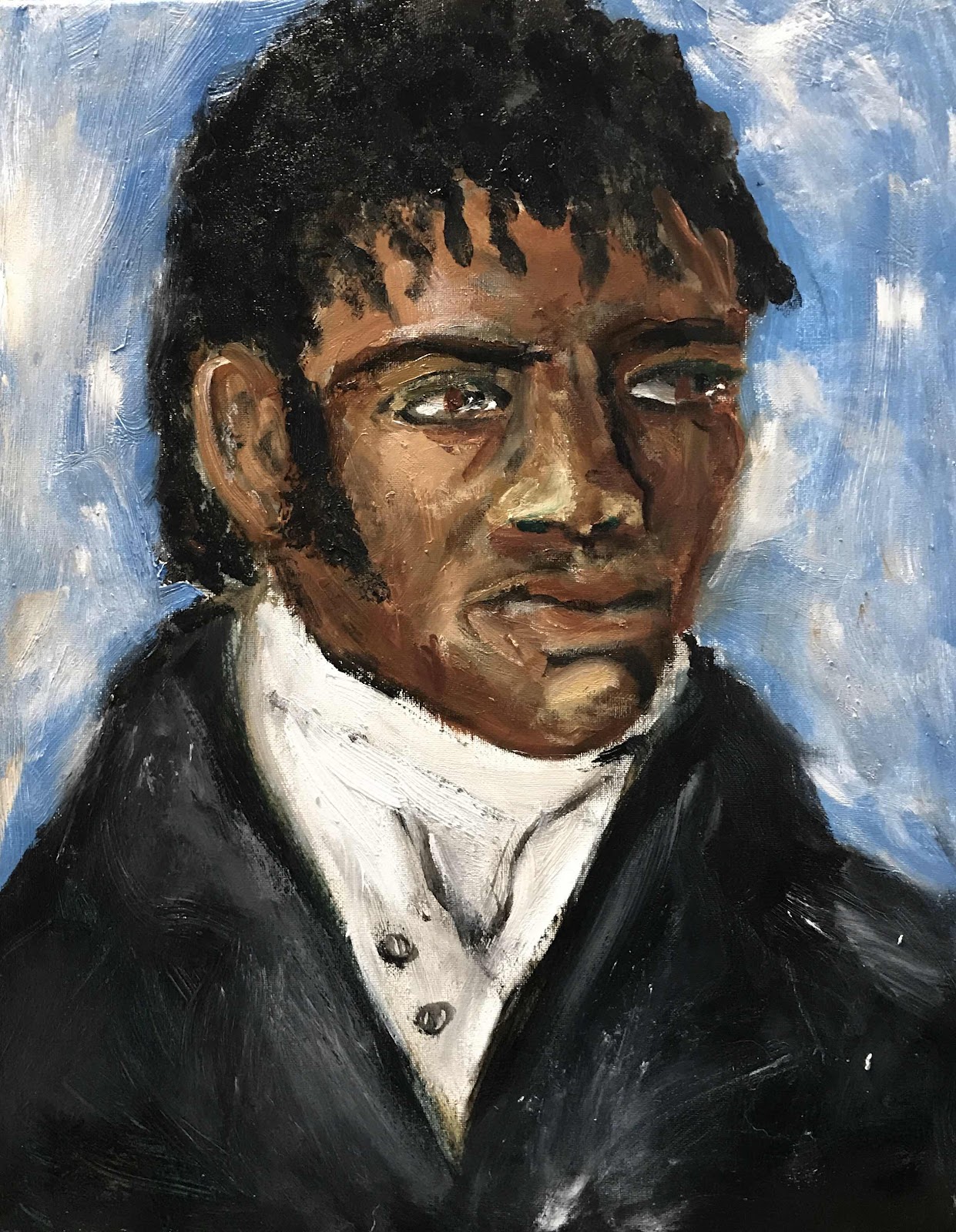
I haven’t been well for the last week or so and thus haven’t been painting. Before that I finished a portrait of William Davidson. William Davidson was born in 1781 - the illegitimate son of the Attorney General and a local black woman. At the age of 14 he travelled to Glasgow to study law. Press-ganged into the Navy he returned to Scotland and studied mathematics at Aberdeen. Before completing his studies he moved to Birmingham and became a cabinet maker. He later moved to London and following the Peterloo massacre he became interested in radical politics and began reading radical newspapers and also became interested in the works of Tom Paine. Soon he joined a Spencerian group of radicals, and not long after was part of the group of 11 radicals who were set up by a government agent to attempt the assassination of government cabinet members. The Cato Street Conspiracy. They were all subsequently captured and sentenced to death. William Davidson along with 4 other conspirators was hanged and decapitated outside Newgate Prison on May 1st 1820.


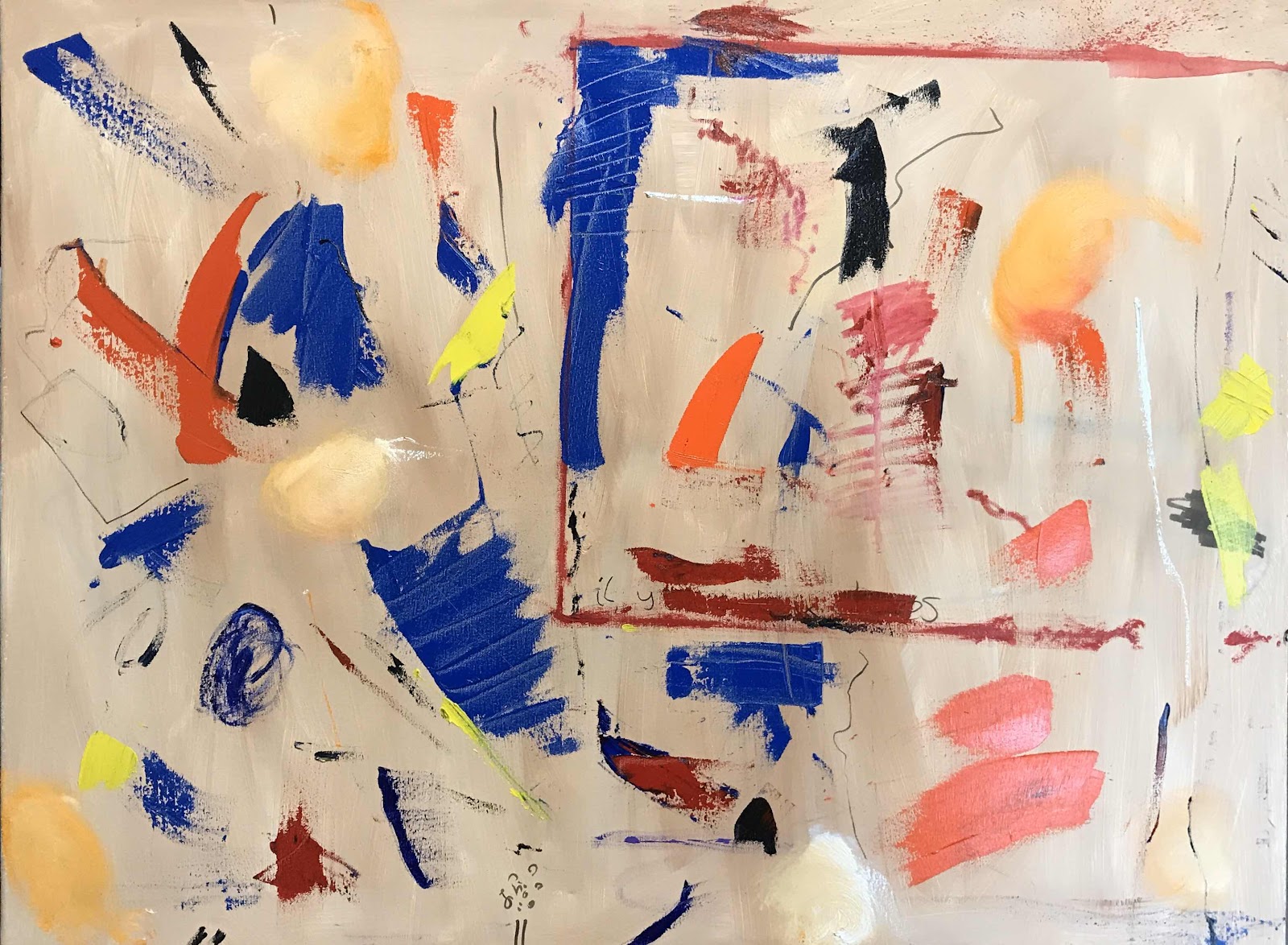
Since finishing that, I started working on a new thing, which I will reveal when I think it’s worth showing - still on the revolutionary theme but a lot different. And whilst working on that I felt the need to be working and playing with something even more different. I wanted to play with shapes, lines and colours in a different, lighter way, and this is what I came up with:

“Dare”, Oil on canvas, 90x70cm.


Tuesday, 12 November 2019

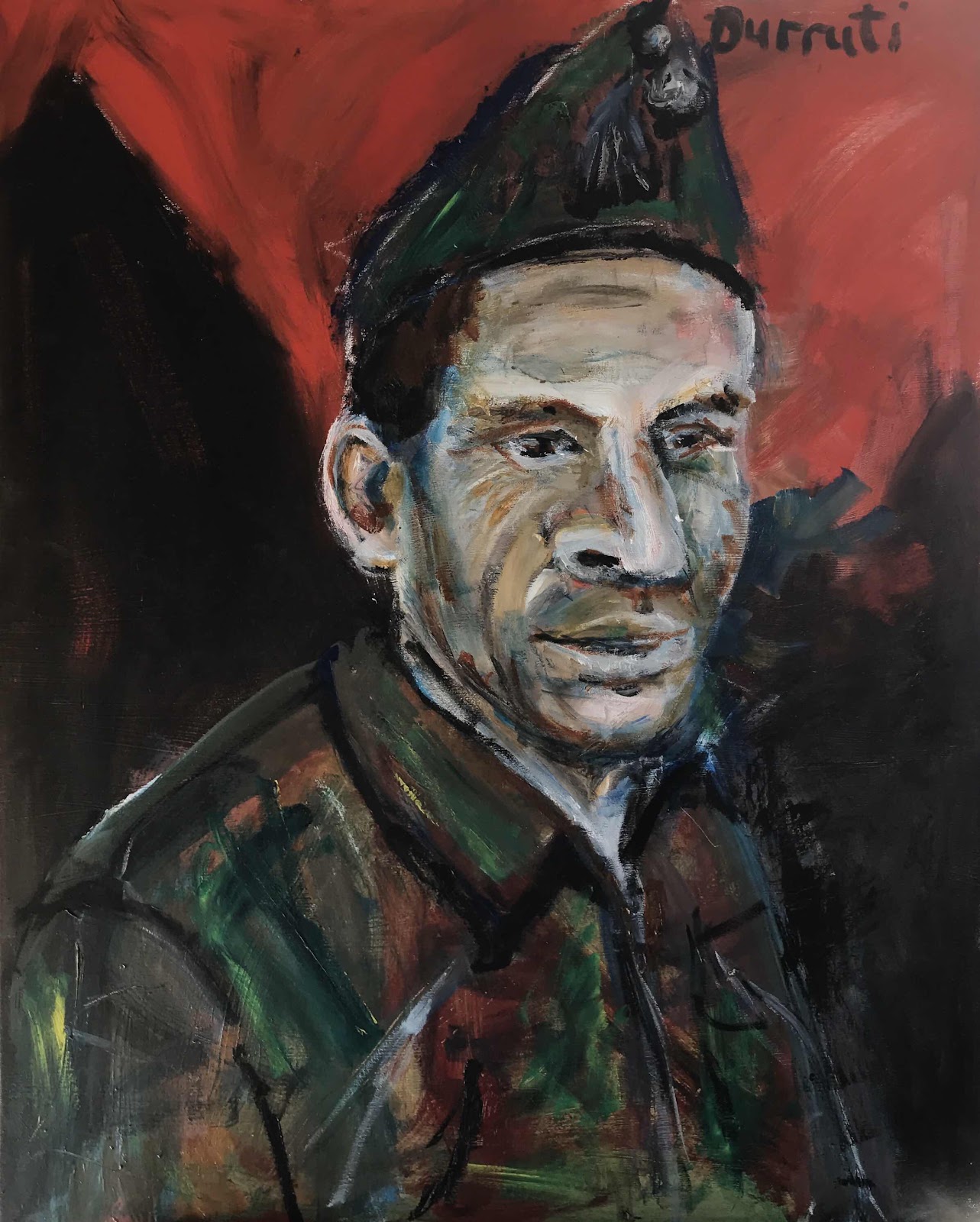
Durruti. Oil on canvas

Bienventura Durruti led an anarchy communist army in the fight against fascism in the Spanish Civil War. I get the depressing impression that the Spanish Civil War is ignored and forgotten by young people which is sad. Many socialists of my parent’s’ generation- or perhaps a little older - went to Spain to fight to defend the elected left wing government from the fascist coup led by Franco and his army colleagues. A sad part of European history that served as a prequel to the Second World War, and a practice ground for Hitler who provided support for Franco, as they bombed and murdered many hundreds of thousands of innocent Spanish citizens. Many Catalans escaped from fascist Spain by climbing over the Pyrenees to safety in Catalan France. Not far from where I live. The bitterness still exists as is visible in Catalonia to this day. Durutti was executed by fascists, but remains a revolutionary hero.


Saturday, 19 October 2019

Sandinista!

Finally finished my portrait of Sandino- great inspirational revolutionary leader in Nicaragua in the early 20rh century and inspiration for later revolutions in Nicaragua. And of other Latin American revolutionary action against CIA  backed corrupt governments in the region. And the great Clash album too. It has been good to be painting again after being unable to for a while because of the return of arm and shoulder pain. Thankfully that’s gone and now I’m just suffering from m foot/ankle pain which doesn’t prevent me from painting. No brushes between my feet!


Saturday, 12 October 2019

Bearded white men

One of the issues I have in continuing with my series of portraits of revolutionaries is finding interesting enough photos of people who I am interested in because of what they have done. I don't just paint people because of what they have done and because I find their lives, writings or place in history, I have to find a photo of them interesting enough to inspire a painting. A big problem here is the large number of bearded white men involved in the revolutionary history.  I am reading about people from all periods of history from all around the world, but as everyone knows it is a lot of men writing about men. And in fact a lot of white men writing about white me. And I am beginning to think a lot of bearded white men writing about bearded white men.  Especially when you get to looking at revolutionary Europe in the 19th century. Here's just a few:


I am sure you recognise a few of these - the obvious ones such as Lenin and Marx at least - but the others? I was looking for a portrait of Pavel Axelrod you can see him amongst the guys above - the bearded white guy ... OK the 9th of the photos above, just after Martov and before Lenin. His story is quite interesting and different and he isn't well known, so I though maybe I could add him to my list of potential portraits. But no. Just another bearded white guy. I like that photo but I have had enough at the moment of bearded white men as subjects. So what I am working on is another man - but not with a beard, and not European. Sandino.  Outline sketch below:


Monday, 23 September 2019

More portraiture... photography, copyright, composition

This blog is finally catching up with the portraits I have done but not shared. I am just getting back into painting and drawing again after my summer of pain. Shoulder and arm and knee pain have reduced to acceptable levels - now I only have my ankle and foot to deal with. X rays on Tuesday to see if there’s a break. So here is Nadezhda Krupskaya a recent portrait I have done. she was a leading player in the Russian Revolution and was at one time Chair of the Russian communist party- as well as being the wife of Lenin.


So here she is. Or rather here is a painting of her. Or rather here is a painting of her using an old black and white photo of her I found on the net. Or rather here is a photo of my painting of her. So which is the art? The photo of the painting? The painting itself? The original photo? Hmm.
Here’s my 10 pence worth: the original photo was not a piece of art. It was a photo taken for official purposes and not meant as a piece of art. Even so I would argue that it does have some artistic value as an original piece of creativity.  The photo of the painting isn’t art - it’s a digital reproduction of a painting- which is the art.  I may be wrong but I don’t think this is controversial. 


Below is a photo I took last year in the National Portrait Gallery in London:


A portrait of Harold Wilson by Ruskin Spear . A great piece of art, a great painting. I love it. Is my photograph of the painting art? Of course not. No one could say that. It’s a photo of a piece of art. Yes?


 I don’t think that’s controversial. No here’s another photo I took, this time in Barcelona:


Is my photo art?  Or just a photo of someone else’s creativity? There is at least one photographer selling his photos of other people’s graffiti. Hmmm. I know of another one who likes recording graffiti everywhere in homage to the graffiti and the graffiti artist. He doesn’t sell his photos, he just shows them on Instagram. He does it because he likes doing it. He has even less followers than I do and just does it for fun. He doesn’t think he is creating art, he thinks he’s recording art. I agree. Somehow photographing other people’s creativity doesn’t feel like art to me. It’s clear to me that there’s a difference between creativity and recording. And the fact that one person does it on their mobile phone and the other does it on a fancy SLR camera doesn’t make any difference. To me selling your photography of other people’s artwork without giving any credit or royalties is tantamount to plagiarism. So here’s one more photograph:

It’s a portrait I did of my dad, Dannie Abse, several years ago. Today would have been is 96th birthday


Wednesday, 11 September 2019

Portraits Pain and Mobile apps

Well to start with I have downloaded a mobile app to encourage myself to do more on this blog. I tried this once before and it didn’t work but hopefully this app will be better.
Secondly (in reverse order in case you hadn’t realised) I have had a painful summer. First my knees went- I have put on so much weight and my arthritic knees couldn’t take it. Injections of artificial cartilage eventually cured this. But then the return of tennis elbow after four years crippled my arm and this unsurprisingly spread back to my shoulder. Aaargh. And I won’t even mention my sprained ankle. Oh ok I will.
Before all that I managed to carry on with my portraits series. 


Above is Elaine Brown- former Black Panther leader. She was for a while chair of the Panthers and their education officer. To this day she’s still a political activist and should for Senate in 2008 for the Green Party.


The painting above is of Welsh Socialist, reformer and a founder of the cooperative movement Robert Owen. I painted this alla prima - wet on wet. I think I need more practice with this technique, it’s hard but in many ways more rewarding- more accidents- more intense. It  is so different to adding glazes, layer over layer. Generally I find myself somewhere in the middle of this!
Last but not least:


I am really doing something wrong if you don’t recognise Fidel Castro above, and if you have no idea who he is- READ!!

Back soon with some other recent paintings.

Friday, 15 February 2019

Durruti and Roma

Durruti

It's been kind of a busy time. I have finished a weird painting of Buenaventura Durruti which I have mixed feelings about: I like the technique I used and how the paint looks, but unfortunately I think I have made Durruti look like a moronic clown - a bit like a version of Guignol - the scary looking French puppet which I guess is a pit like Punch and Judy. 


 I am sorry about this because in many ways i admire Durruti, who led a column of anarchists to fight against the fascist Franco during the Spanish civil war. I don't think Guignol did anything as admirable. I was going to put a picture of Guignol on here too, but he is too scary and horrible looking.

"It is we the workers who built these palaces and cities, here in Spain and in America and everywhere. We, the workers. We can build others to take their place. And better ones! We are not in the least afraid of ruins. We are going to inherit the earth. There is not the slightest doubt about that. The bourgeoisie might blast and ruin its own world before it leaves the stage of history. We carry a new world here, in our hearts.  That world is growing in this minute."
— Buenaventura Durruti 


Rome

The news about Rome is that I am honoured to have been selected for Artrooms Roma an international Art Fair to be held at the end of March. It is an unusual event - each artist is allocated a room at the Church Palace Hotel (a four star Hotel in central Rome) and turns this room into a mini gallery for a few days. I am looking forward to it - as well as being excited about the exhibition,  I actually haven't been to Rome for 42 years, and plan on driving there - 1000km each way - which in itself will be an event. I am now frantically framing and tidying up paintings as well as working on a commission which has to be completed soon.  So there's nothing like a bit of procrastination by writing this blog!


Friday, 28 December 2018

The Greatest

Another portrait - a bit different, Ali, the Greatest. An inspiration too many. His political views upset some, as an active member of the Nation of Islam, but he contributed to civil rights fights in the USA, and refused to fight in Vietnam, costing him his freedom. He was a man of principle, and without question the greatest boxer who ever lived - as well as being a fantastic showman. I love him, and consider him to be another great revolutionary.
Ali
oil on canvas 90x70cm
I wish I could photograph the painting a bit better - the black background makes it hard!

Wednesday, 28 November 2018

Trotsky - whatever happened to our heroes?

I had to get around to Russia sooner or later, and Trotsky's exile in Mexico and his interesting looks make him a good subject. What's the difference between Stalin and Lenin's views and Trotsky's? Put simply Trotsky believed in internationalism, not the concentration of communism in one state - the Soviet Union. Trotskyists believe that his views were more reflective of Marx's. Leninists don't . Meh. As Bakunin said- A dictatorship of the proletariat is still a dictatorship. Stalin was the real problem, as he ended up believing in the dictatorship of Stalin. Simplistic? Moi? Stalin purges Trotskyites in the Soviet Union, and eventually murdered Trotsky. As the Stranglers once noted "He got an icepick that made his ears burn".

Leon Trotsky - Oil on Wood Panel 40x52 cm

Thursday, 1 November 2018

It's been a long time... More revolutionary portraits and other stuff

It's been a long time since I've updated the blog. Lots of stuff has happened since then, and I have done lots of work of different types, quality etcetera. I have managed to keep my main website at davidabse.com up to date so for missing artworks take a look there! Mainly I have continued with my portrait series of revolutionaries. Here are some them:

This is Franz Fanon. A very interesting man. He was born in Martinique and was therefore French. He trained as a doctor became a psychiatrist, and is noted for his writing on philosophy, politics and race. And of course as a revolutionary and a Marxist. He swapped sides in the Algerian War of Independence and became a member of the Algerian Liberation Front. He worked on the front line of the war supporting wounded and traumatised Algerians. His written work became hugely influential, particularly his analysis of the effects of colonialism black people. It's very hard to simplify his life down to one paragraph, but here's a quote from leading African scholar and philosopher Lewis R. Gordon: "Fanon's contributions to the history of ideas are manifold. He is influential not only because of the originality of his thought but also because of the astuteness of his criticisms. He developed a profound social existential analysis of antiblack racism, which led him to identify conditions of skewed rationality and reason in contemporary discourses on the human being"

This is Giuseppe Garibaldi, 19th century revolutionary, mainly known for his influential involvement in the unification of Italy, but also because of his revolutionary activities in South America and France. He was born in Nice (then part of Piedmont) in 1807. He worked as a merchant seaman, and as a young man joined the then illegal "Young Italy" movement founded by another Italian revolutionary Giuseppe Mazzini. After being condemned to death for his anti-Austrian revolutionary activities, Garibaldi spent many years in exile supporting revolutions across the Atlantic, always looking, however to return home and fight for the unification of Italy.  He loathed the dominance of the Catholic church and what he saw as its misuse of power in Italy and in other latin countries. He famously wrote "God didn't create man, man created god". His ideas for his time were revolutionary, and he supported always increased rights for ordinary people.

Emiliano Zapata Salazar 8 August 1879 – 10 April 1919) was a leading figure in the Mexican Revolution, the main leader of the peasant revolution in the state of Morelos, and the inspiration of the agrarian movement called Zapatismo. He fought for the freedom of ordinary Mexican people from the dictatorship of Porfirio Diaz, which had last for 35 years, and caused immense poverty for agrarian workers. He fought all his life for land reforms that would give ordinary people control over their land and lives, and whilst he succeeded in getting these reforms implemented in Morelos, Mexico deteriorated into a series of battles, wars and disputes. Series of governments refused to issue reforms that revolutionaries had fought for, and Zapata viewed that a number of his contemporaries sold out, so he had little option but to keep fighting. Government forces killed Zapata eventually by tricking him to come to a meeting, and then gunning him down.


Thursday, 29 March 2018

And more political portraiture

I have continued with the portraiture. I commission which I won't publish yet, and a couple of others: Huey Newton and Emma Goldman. Emma Goldman was an interesting woman. She left Russia (actually now Lithuania) as a teenager in 1885. Many Jews did at that time, including my great grandparents, escaping anti-Semitism. It wasn't a safe place to be a Jew at the time. She ended up in America and became a famous anarchist and activist, fighting for the rights of women, and the rights of workers. She was jailed numerous times in the US and was eventually exiled to Russia in 1917, where she for a while embraced the revolution, but ultimately condemned the bolshevik state for its dictatorship of the proletariat, as other anarchists did.
Emma Goldman
Oil on Canvas 35x24cm
Huey Newton was one of the founders of the Black Panthers in the 1960s in the USA, alongside Bobby Seale. Despite getting regularly into trouble as a teenager, Newton was extremely well-read, intelligent and qualified. There is so much written about his life and about the Black Panthers I can't hope to put anything useful in writing here. It's impossible to write about everything Newton and Goldman did and said, but it's worth anyone's time doing the research. Both advocated the use of violence on occasion to attempt to achieve their aims. Given the oppression of black people, of women, of discrimination and of persecution that they both suffered, it is not a surprise, nor easy to condemn.

Jeez this is possibly the most illiterate entry I've ever written on this blog! Just look at the pictures and forgive my inadequacies...
Huey P Newton
Oil on canvas 60x60cm 

Tuesday, 6 February 2018

Anarchist portraits

I've completed a couple more portraits. One of William Godwin who was very interesting in many ways. He was influenced by both Bakunin and Proudhon and amongst other things was father of Mary Shelley - author of "Frankenstein". There's a lot more to him than that but you can look that up. The other is of Rosa Luxemburg, another interesting anarchist-communist. She disapproved of what became of Soviet Russia and she also was influenced by Bakunin. The point of these early anarchist/anarcho-syndicalists was that they believed that better communities would be built if each community or workplace was self-governed, not ruled by the state. Bakunin argued that a dictatorship of the proletariat was still a dictatorship...

These ideas could not not be more opposite to the "individual" anarchists in the USA, many of whom support Trump. These right-wing anarchists (as they style themselves) believe in individual "self-rule" with no responsibility to society or their communities - or anyone else. They are nasty fuckwits who have perverted a philosophy for their own ends.

William Godwin, Oil on canvas

Rosa Luxemburg
Oil on Canvas 60x60cm
I've also been doing some portrait drawings. Here's one: Spanish anarcho-syndicalyst and anti-fascist  fighter, Juan Garcia Oliver:

Juan Garcia Oliver
Ink on paper

Tuesday, 19 September 2017

Portraits and politics. And history.

I have been continuing with my portraiture. I find it relaxing and I use it to research things that interest me. For example the paintings below. The first is of Pancho Villa, the Mexican revolutionary general, who led successful battles against reactionary forces, who were (of course) supported by the USA. Villa's army was not ultimately successful, and he was assassinated in 1920.

Throughout the 20th century (and beyond) the USA increasingly used its growing power and influence to undermine democratically elected governments of South American countries, whose politics the USA felt (and feels) is/was undermining of US capitalism. The role of the US in these acts of oppression throughout the American continent ( and elsewhere) - it's extraordinary what sort of anti-democratic acts America has got away with - and continues to - whilst it defends the (ahem) "Free World"

Pancho Villa 
The second portrait is of Earl Browder, the former leader of the US Communist Party. These days the whole concept of a thriving Communist, Socialist, Anarchist movement in the USA seems so unlikely and so against contemporary mainstream thought, because people like Browder, and others were suppressed, repressed and persecuted. The reference for the painting is a photo when a young Browder was jailed as a conscientious objector during the first world war.
Earl Browder

Wednesday, 13 September 2017

More portraiture, me and Sacco and Vanzetti

I am continuing with portraiture, with varying degrees of success. Unposted is a portrait of my wife, which (despite many days' work) I just can't get right. I seem to have a greater problem with painting women than men, and I am sure someone will give me a good Freudian reason for this. So instead here's a self portrait, which I'm quite pleased with, and a portrait of Sacco and Vanzetti - two innocent anarchists who were executed in the USA for crimes they didn't commit. See https://en.wikipedia.org/wiki/Sacco_and_Vanzetti  for a decent bit of history and background. Poor guys,

Self Portrait
Oil on Canvas 64x56cm

Sacco and Vanzetti
Oil on Canvas 60x60cm

Sunday, 9 July 2017

Portraits

After my fun and games with Simon Bolivar, I have followed it up with three more traditional portraits, copies of paintings that give me the opportunity to experiment with oils further, and with various methods and surfaces. I am still following my revolutionary theme however and below are three portraits, of Thomas Paine - great American-British-French thinker, philosopher and revolutionary - oil on wood, Anacharsis Snoot - another revolutionary in France - oil on clay board, and finally Joseph Proudhon (based on a Courbet portrait) great thinker, anarchist and revolutionary.  Oil on canvas, but much bigger. It's inspiring living in a country with a long history of revolutions. And inspiring personalities, be they French, British, American or Dutch.

Paine,
33x41cm, oil on wood

Anarchasis Snoot
15x15cm, oil on clayboard

Proudhon
76x60cm oil on canvas

Thursday, 18 May 2017

Simon Bolivar, Hearts and the problem with Blogger

I have been doing both abstract and figurative work recently. I felt in the need to undertake a copying exercise - I think a useful training thing. So here's a painting, in oils, I have done of Simon Bolivar, the great South American revolutionary. It's interpretive copy of a painting of Bolivar by someone I cannot find out who! There are lots of paintings of Bolivar, including numerous versions based on the same image. Confusing.. Anyway, here's mine:


Simon Bolivar
Oil on Canvas 22x33cm
I have also been working on a series of abstract heart paintings. I am often inspired by death and dark things. But I felt I wanted to do something more positive, and produced one for my wife . Following that I have done some more. I am pleased that she likes hers best.


Finally, I am frustrated by Blogger making it so hard to update from an iPad. Like many people I use my tablet and phone for internet stuff more than 90% of the time: but I can't update my Blog, and, to be fair, neither can I update my website, except from my PC. This all seems a bit out of date. I am thinking of changing everything to WordPress or Wix or something, but it's a bit painful...